Have you ever wondered how you stay balanced when you move around? Deep inside your inner ear, there is a clever system that works like a well-organized team. One part of the system listens to sounds and turns them into signals your brain can understand, while another part watches your head movements closely.
When this balancing system isn’t working right, nearly 40% of people experience dizziness. That shows just how important it is to have every piece working together smoothly.
In this post, we take a closer look at the inner ear and learn how its parts combine to help you stay steady with every step. Isn't it amazing how our bodies are built to keep us on track every day?
How Inner Ear Structures Maintain Balance
Inside our inner ear, two systems work together to help us hear and stay balanced. The cochlea is a spiral organ that turns sound waves into signals. Your brain reads these signals as music, speech, or other sounds so you can enjoy them and communicate easily.
The vestibular system, on the other hand, is in charge of keeping you steady. It watches your head movements and your position in space, sending important messages through the vestibular nerve to your brain. In fact, about 40% of people have felt dizzy when something goes wrong with this system.
Here are the key parts of the vestibular system:
- Semicircular canals (anterior, posterior, horizontal)
- Utricle
- Saccule
- Vestibular nerve
Your brain mixes the signals from both the cochlea and the vestibular system to keep you balanced. For example, when you turn your head, the sensors in your inner ear quickly tell your brain to adjust your posture. This teamwork helps your brain know if you are moving, turning, or staying still.
By adding signals from your eyes and muscles, this system lets you walk on bumpy ground, play sports, or dodge obstacles with ease. When every part works well, you feel less dizzy and move more smoothly in your daily life.
Semicircular Canal Dynamics in Inner Ear Equilibrium
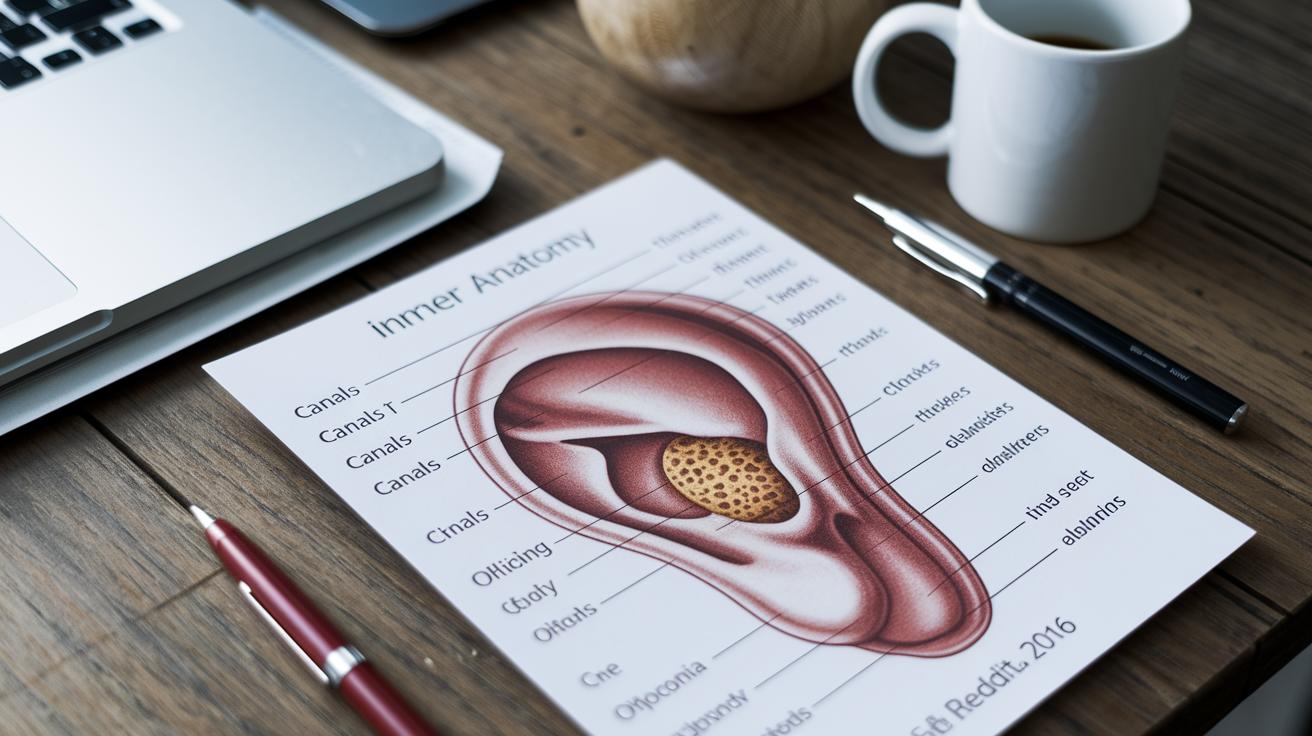
Every inner ear has three small canals set at right angles: horizontal, anterior, and posterior. Because of this design, even a small head turn makes the fluid inside shift noticeably.
Inside these canals flows a liquid called endolymph. When you move your head, this fluid shifts and bends tiny hair cells in a small area known as the ampulla cupula. Think of endolymph as a gentle stream. As you turn your head, the moving fluid nudges the hair cells just enough to send a clear message to your brain about how fast and how far your head moved. This signal helps your brain understand your body’s position in space. But if the fluid flow is even a little off, the signal might get mixed up, leaving you feeling unsteady.
A small disruption in this canal system, such as tiny calcium carbonate crystals that are out of place, can make you feel dizzy.
Utricle and Saccule Functions in Inner Ear Balance
Inside the central vestibule of the inner ear, you'll find two key structures called the utricle and saccule. They sit side by side in a small sac, helping our body notice head tilts and straight-line movements. Thanks to their perfect placement, they keep an eye on gravity changes and movements like leaning forward or backward, which is vital for keeping our balance.
Within these little organs, tiny calcium carbonate crystals known as otoconia are embedded in a jelly-like layer that covers sensory hair cells. When your head moves, the shifting otoconia tug on this membrane and bend the hair cells. This bending turns your movement into electrical signals that travel along the vestibular nerve straight to your brain. For example, if you suddenly lean or tilt, these crystals provide feedback that helps your brain adjust your posture. It’s like having a small, precise sensor that constantly updates your body's orientation.
If the otoconia move in an unusual way, they can send mixed-up signals to your brain. This can lead to feelings of vertigo and make you feel off balance during everyday activities.
Inner Ear Fluids in Balance: Endolymph and Perilymph Roles

Inside your inner ear, two important fluids fill different spaces. Endolymph fills a soft, flexible area called the membranous labyrinth, where tiny hair cells help detect head movements. Meanwhile, perilymph fills the surrounding bony labyrinth, acting like a cushion and keeping the pressure steady.
When you move your head, endolymph flows within its confined space and pushes gently against the hair cells. These cells then turn the motion into nerve signals that your brain quickly understands as movement. At the same time, perilymph helps by absorbing shocks and stabilizing pressure. Together, these fluids work like parts in a well-tuned machine to keep your balance on track.
If this fluid balance is disrupted, problems can occur. For example, in Meniere's disease, an abnormal increase in endolymph pressure can disturb hair cell function. This imbalance might lead to vertigo, hearing problems, and a feeling of instability.
Anatomy of the Inner Ear Labyrinth and Vestibule for Balance
Deep inside your ear, you'll find two main parts that work together to help you hear and keep your balance. First, there's the hard, bony labyrinth that acts like a protective shell. Inside this shell lies the softer, membranous labyrinth that provides a flexible inner structure. This setup is very important.
The bony labyrinth has three key areas. The first is the cochlea, which is a spiral-shaped organ that turns sound into signals for your brain. Next is the vestibule, found right in the middle, which helps you stay balanced by housing tiny sensors that tell your brain the position of your head. Right beside the vestibule are three semicircular canals. Each canal is arranged on a different plane to pick up on your head’s rotational movements. Together, they form a strong system that helps you hear clearly and maintain balance by accurately processing signals from your environment.
The membranous labyrinth fits perfectly inside the bony labyrinth, creating separate spaces filled with a fluid called endolymph. These clear divisions are key because they allow the precise transfer of mechanical forces to the nerve cells. This process is what helps your brain maintain accurate balance and spatial awareness every day.
Diagnostic Tests to Identify Inner Ear Imbalance

Getting the right tests is key to figuring out why you feel off balance. These tests help doctors pinpoint if your inner ear is the source of the problem or if something else might be at play.
Caloric Testing
In this test, warm or cold air or water is used to gently move the inner ear fluid, known as endolymph (the liquid that helps control balance). This movement makes tiny hair cells react and can cause a quick, automatic eye movement called nystagmus. When one ear reacts differently than the other, it may show that one side is weaker. For example, a quick burst of warm air might trigger a strong response in a healthy ear, while the other ear lags behind.
Videonystagmography (VNG)
This test records your eye movements on video to show how your balance system is working. By watching the pattern and strength of nystagmus, doctors can better understand the inner workings of your balance system. It’s a clear way to see how your eyes respond when your inner ear fluids are in motion.
MRI Imaging
MRI scans create detailed images of your inner ear and the nerves that send balance signals to your brain. This test is especially useful for ruling out problems in the brain or other central areas that might be causing imbalance.
| Test Name | Purpose | Procedure |
|---|---|---|
| Caloric Testing | Checks ear balance by detecting differences between the two ears | Uses warm or cold air/water to stimulate the inner ear |
| Videonystagmography (VNG) | Assesses the pattern of eye movements | Records eye movements as a response to inner ear fluid changes |
| MRI Imaging | Examines the inner ear structure and related nerves | Uses magnetic resonance imaging scans |
Restoring Inner Ear Balance: Treatment Options and Rehabilitation
Targeted therapies can help ease vertigo and improve your balance by addressing the mix-up between your inner ear sensors and your brain. For instance, a simple maneuver might quickly reduce that dizzy, spinning feeling that gets in the way of daily life.
Canalith Repositioning Maneuvers
The Epley maneuver is often used to treat benign paroxysmal positional vertigo (BPPV), which is a common inner ear issue. In this technique, a series of gentle head movements guide calcium crystals back to their proper spot. Think of it like slowly turning your head as if you’re glancing over your shoulder and then nodding slightly, allowing gravity to do its part.
Vestibular Rehabilitation Exercises
Vestibular rehabilitation involves specific exercises designed to improve your gaze stability and balance while helping your brain adjust to the mixed signals from your inner ear. Regular practice of these movements can lessen vertigo episodes and boost your overall stability. Many people notice a significant improvement after a few weeks of consistent exercise with professional guidance.
Pharmacological and Surgical Options
If maneuvers and exercises don’t completely clear up symptoms, medications can help ease both vertigo and nausea. In cases that persist, especially with conditions like Meniere’s disease (a disorder that can affect the balance and hearing parts of your inner ear), doctors might suggest surgical solutions. These treatments work on balancing the fluids in your inner ear when other methods aren’t enough.
Final Words
In the action, we've examined how both hearing and balance systems in the inner ear work together. We highlighted the distinct roles of the cochlea and the vestibular system, discussed semicircular canal dynamics, and explained the functions of the utricle, saccule, and inner ear fluids. We also reviewed diagnostic tests and treatment options that help restore equilibrium.
Remember, understanding balance in inner ear systems can empower you to better support overall well-being and make confident health choices.
FAQ
What part of the ear is responsible for balance?
The inner ear’s vestibular system, including structures like the semicircular canals, utricle, and saccule, is responsible for maintaining balance by detecting head movements and spatial orientation.
How does the ear maintain balance?
The ear maintains balance by converting head movements into nerve signals via the vestibular system, which communicates with the brain to help us stay oriented and stable.
Which inner ear fluid is crucial for balance?
Endolymph fills the membranous labyrinth and is crucial for balance as it transmits mechanical forces to the sensory cells during head movement.
What are common treatments for ear balance problems?
Ear balance problems can be managed with repositioning maneuvers like the Epley procedure, vestibular rehabilitation exercises, medications, or, in severe cases, surgical interventions.
What are the symptoms of inner ear imbalance?
Inner ear imbalance typically shows symptoms such as dizziness, vertigo, unsteadiness, and sometimes nausea, often indicating an issue with the vestibular system.
What might cause the vestibular system to malfunction?
Malfunctions in the vestibular system may occur due to disrupted endolymph flow, displaced otoconia, infections, or structural issues, all of which misguide the brain’s processing of balance signals.
Is ear balance a serious concern?
Ear balance issues can be serious if persistent, as they may signal underlying conditions that require attention from health professionals to prevent further complications.