Have you ever noticed how some people seem to move with ease while others wobble a bit? Even standing still, your balance plays a big role in how confident you feel every day. Simple exercises can help your eyes, ears, and body work together, making your movements feel safer and more controlled. In this post, we share clear, practical tips to help you stand steadier. Get ready to feel more confident with every step you take.
Improve Balance with Key Stability Exercises
Static balance means keeping your body steady when you are not moving, like standing in line at the grocery store without swaying. Your eyes, inner ear, and body sensors work together to keep you stable when you are stationary.
Dynamic balance comes into play when you are in motion. Whether you're walking across the room, climbing stairs, or having fun with a game, dynamic balance helps your body adjust and stay steady while you move.
- Standing Step Training: Stand upright near something secure and picture a clock in front of you. Quickly step to the number you choose to help improve your reaction speed and balance.
- Single Leg Stand: Try standing on one leg for up to 30 seconds while looking at a fixed spot. If you need extra support, feel free to use a counter or nearby object.
- Heel-to-Toe Walking: Walk in a straight line by placing the heel of one foot directly in front of the toe of the other. This practice helps improve your focus and keeps you aligned.
- Sit-to-Stand: While sitting on a chair, try standing up without using your hands and then sit down smoothly. This simple move strengthens the muscles in your lower body that are important for balance.
- Stability Ball Plank: Get into a plank position on a stability ball to challenge and build your core strength. Keep your eyes steady to help prevent the ball from wobbling.
- Clock Toe Touches: Stand tall and gently reach toward different imagined positions around you, like numbers on a clock. This exercise enhances your flexibility and helps your body sense its position in space.
If you want to make these exercises a bit harder, you might try closing your eyes or tilting your head slightly. Using a foam pad to stand on can also add a fun challenge by making your footing less predictable. Always perform these exercises near something stable and have someone close by for support if needed. These small adjustments help you safely build your balance and boost your confidence.
Balance Mechanics: How Balance Works in the Body
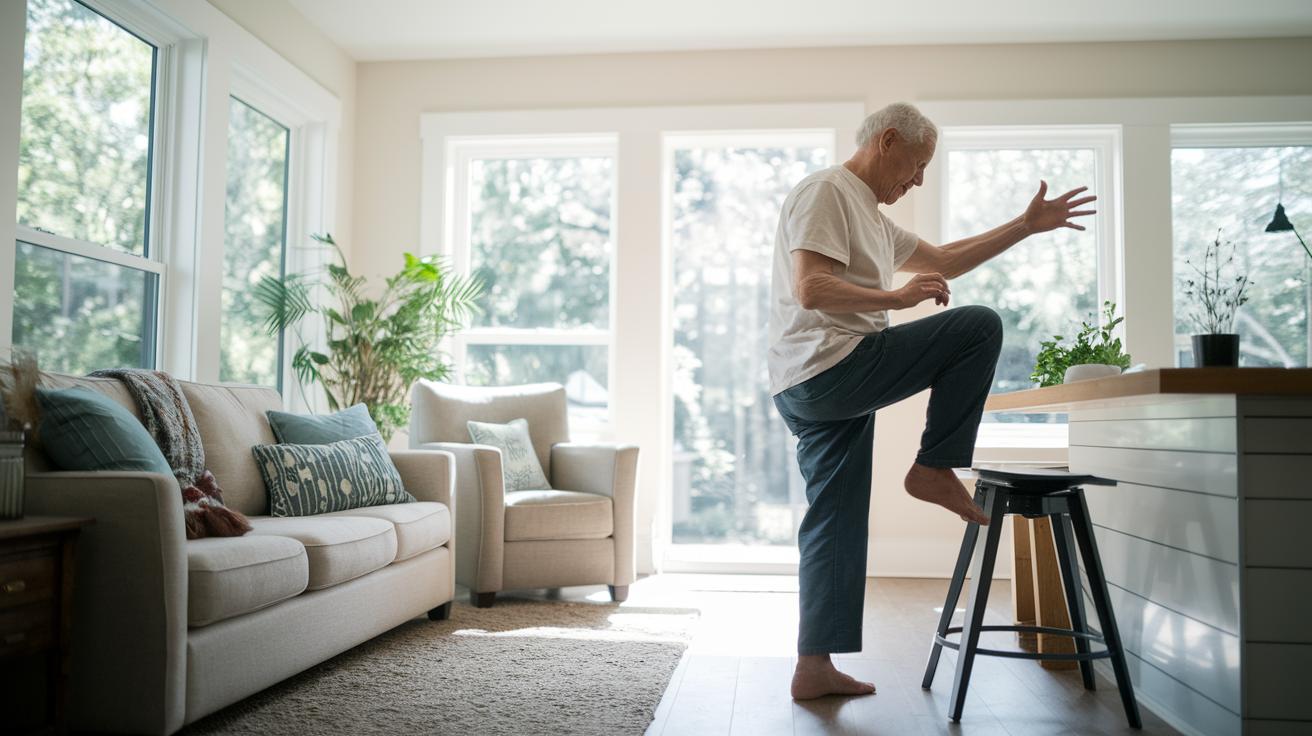
Your body uses three main systems to stay balanced: the somatosensory system, the visual system, and the vestibular system. The somatosensory system sends signals from your muscles and joints to let your brain know where your body is. Your eyes give visual clues about your surroundings, and the vestibular system in your inner ear tracks head movements and changes in direction.
These systems work closely together while your brain constantly reviews the information they provide. When you focus on a specific point ahead, your brain blends all these signals to keep you steady. Think of it like mixing ingredients for a favorite recipe; each part plays its role to help you maintain your balance.
Sometimes, balance can be disrupted when these signals don’t match up. For example, standing up too quickly or turning your head suddenly while you’re moving might create conflicting signals. Imagine stumbling over a curb, the sudden change makes your brain work overtime to sort out the signals, and for a moment, you might feel off-balance. Practicing challenges like closing your eyes or tilting your head during exercises can help these systems cooperate better over time.
Progressive Home Routines for Better Balance
Building your balance is like exercising a muscle. Small, steady workouts can help you feel more stable over time. If you practice about three times a week, you might notice a difference in as little as four to six weeks. Think of each session as a building block that boosts your confidence and steadiness.
Beginner Routine
Start with simple moves that use support. Try standing on one foot next to a counter for up to two minutes until it feels natural to balance on one foot. You can also do gentle squats while holding onto something stable, slowly rising and lowering yourself. Another good option is doing side leg lifts with a chair's back to steady you. Even lifting your heels while seated can help wake up important balance muscles. Imagine walking lightly, as if you were stepping on soft clouds, each moment makes you a bit stronger.
Intermediate Routine
Now, aim to rely less on support. Practice standing on one leg without holding on, trying for about 30 seconds on each side. Add an extra twist by closing your eyes to let your inner balance guide you. Also, try slow stepping exercises without using a hand for support; keep looking at a fixed point to help avoid swaying. A gentle head turn while you stand still can challenge your balance even more as your body learns to adjust.
Advanced Routine
At this stage, mix in some dynamic drills to further improve coordination. Walk in a straight line by placing one foot directly in front of the other, similar to walking on a narrow beam. Try turning your head gently while you walk to challenge your stabilizing muscles. You can also stand or step on a soft foam pad, which creates an unpredictable surface that mimics everyday challenges. These active drills help fine-tune your movement and ensure your balance stays strong during daily activities.
Senior Balance Training: Age-Related Stability Workouts

As we age, our muscles, joints, and senses change. Things that used to be easy now demand more care and focus. But don’t worry, a few small tweaks and some simple exercises can help you stay steady and confident every day.
Here are four gentle exercises designed to boost balance:
- Controlled Sit-to-Stand: Sit in a sturdy chair with your feet flat on the floor. Slowly stand up without using your hands, then carefully sit back down. This move builds strength in your legs and helps you feel more in control.
- Heel Raises: Stand near something sturdy for support. Rise onto your toes, hold for a moment, and then lower back down. This exercise strengthens your calf muscles, making it easier to keep your balance while walking.
- Side Leg Lifts: Hold on to a counter or chair for extra balance. Slowly lift one leg to the side, then switch to the other leg. This works your outer thigh muscles and can boost your confidence when moving sideways.
- Modified Single Leg Stand: Use a strong chair or counter for assistance. Try standing on one leg for a few seconds at a time, slowly increasing how long you hold it. This helps you feel steadier with every step.
Remember to do these exercises near a stable support and have someone close by if you need help. Start slowly and listen to your body, stop if you feel any discomfort. If you notice more balance problems or find daily tasks tougher than before, it might be a good idea to talk to a physiotherapist who specializes in balance training.
how to improve balance: Feel Confident and Steady
When you start to feel at ease with the basics and notice your balance getting stronger, it’s a good time to step up your game. This advanced stage will help you use more muscles and get your body ready for everyday situations that need quick reactions. Think of it as building on your balance skills so you can feel steady no matter what comes your way.
- Weighted Lunge Variations: Try lunges while holding light dumbbells. This exercise helps you control your body better and makes your leg muscles stronger for a firmer stance.
- Plyometric Drills: Do small jumps or hops that change direction quickly. These moves boost your reaction speed and help you stay balanced during fast activities.
- Rapid Head-Turn Walking: Walk along a line while quickly turning your head from side to side. This simple exercise trains your brain to adjust to changing views and improves overall balance.
- Unstable Surface Training: Use a BOSU ball or another unstable surface to do simple moves like mini squats or step-ups. This technique enhances your sense of how your body moves and improves control.
- Single-Leg Deadlifts with Dumbbells: Holding a small weight in each hand, perform a deadlift on one leg. This drill targets your core and back muscles, challenging your stability even more.
Always listen to your body. Increase the difficulty gradually and keep an eye on how you feel. Adjust your workout pace to maintain good form and avoid getting too tired.
Sensory Drills to Enhance Proprioception and Balance

Closed-Eye Balance Drills
Instead of doing the same old single-leg or tandem stances, try really feeling how your body is aligned and how your muscles are working, all while keeping your eyes closed. Stand on one leg for 30 seconds and pay careful attention to the pressure your foot feels against the floor and the small adjustments your ankle makes. To boost your sensing even more, switch to a tandem stance. Hold this position for 30 seconds, then take a 15-second break before repeating. This method helps your inner ear work harder at understanding space when you can't rely on your eyes.
For example, imagine really noticing the weight shift in your body. Stand on one leg for 30 seconds, concentrating on the pressure under your foot, then move to a tandem stance for another 30 seconds.
Head Movement Exercises
Add some head movements to your balance drills to get even more out of them. Stand on a firm surface and gently turn your head to one side over 2 seconds, pause for 1 second, and then slowly turn it to the other side over 2 seconds. You can also try nodding your head using the same 2-1-2 second rhythm. This slow, steady pace gives your brain the time it needs to register changes in your head's position and helps keep your balance steady.
Imagine a calm rhythm: slowly turn your head to the right over 2 seconds, pause for 1 second, then switch to the left.
Foam Pad and Soft Surface Training
Using an unstable surface like a foam pad adds a fun twist and challenges your sense of balance. Try standing on the foam pad and doing simple weight shifts or gentle leg lifts. Instead of sticking to one static pose, mix it up by holding a position for 30 seconds and then doing 3 slow weight transfers, letting each transfer take 10 seconds. This variation keeps your body guessing and helps both your skin sensors and inner ear work together to keep you steady.
For instance, hold a one-leg stand on the foam pad for 30 seconds, then carefully shift your weight 3 times, taking 10 seconds for each shift.
| Exercise | Time/Instructions |
|---|---|
| Closed-Eye Stand | 30-second hold, 15-second rest, focus on foot pressure |
| Head Rotations | 2-second turn, 1-second pause, repeat on each side |
| Foam Pad Dynamic Shifts | 30-second hold plus 3 weight transfers of 10 seconds each |
Safety Tips and Tracking Balance Improvement
When doing balance exercises, keep them close to a stable support like a countertop or a secure chair, and it might help to have a friend nearby. Using a firm chair or a wall rail can boost your confidence as you work on staying steady. And if you ever feel unsure or wobbly, it's perfectly fine to dial back the intensity of your exercises.
Try writing down your exercise details, such as how long you work out, how often you exercise, and how steady you feel during each session. You can jot these down on a calendar or use a phone app. If you start feeling dizzy or notice your balance faltering, it’s a smart idea to speak with a vestibular physiotherapist (a specialist who helps with balance issues) for advice tailored just for you.
Final Words
In the action, the article shared key stability exercises, explained the body’s balance mechanics, and laid out home routines for better balance. It also highlighted senior safety tips and advanced techniques to maintain a steady stance during everyday activities.
Each section offered clear guidance and safe modifications that empower you to actively improve daily equilibrium. Keep experimenting with these drills and embrace the challenge to learn how to improve balance for a healthier, more confident you!
FAQ
How can I improve balance exercises at home?
Improving balance at home involves practicing both static and dynamic exercises such as single-leg stands and heel-to-toe walks. Regular practice three times a week can boost stability and coordination.
What exercises can improve balance and stability?
Balance and stability improve with exercises like standing step training, single-leg stands, heel-to-toe walking, and stability ball planks. These drills strengthen core and lower-body muscles while reducing fall risk.
How long does it take to see improvement in balance?
Consistent practice of targeted balance exercises can show improvements in stability and coordination within four to six weeks, as regular routines allow the body to adapt and strengthen.
What are five effective exercises for improving balance?
Five effective exercises include single-leg stands, heel-to-toe walks, sit-to-stand drills, stability ball planks, and clock toe touches. Each exercise challenges and builds both core and leg stability.
How can I improve balance with my eyes closed?
Improving balance with eyes closed involves starting with drills like closed-eye single-leg stands or tandem stances. This method challenges your vestibular system and helps build better body coordination.
How do you fix poor balance?
Fixing poor balance means regularly practicing a mix of static and dynamic balance exercises, gradually increasing difficulty by trying modifications like closing your eyes or using a foam pad to challenge your stabilization skills.
Can loss of balance be restored, and is it possible to improve balance?
Yes, targeted balance exercises can restore lost balance and improve overall stability. A consistent routine that strengthens core and leg muscles will help regain steadiness.
What is the best exercise for improving balance?
Single-leg stands are one of the best exercises for improving balance as they effectively challenge stability, promote core strength, and build lower-body capacity for steadier movement.