Basic Vs Applied Science: Fascinating Research Contrast

Have you ever wondered if exploring nature just to learn for fun really matters? Basic science goes deep into discovering life's hidden secrets, almost like finding tiny puzzle pieces that nature has left behind. Applied science then takes these pieces and puts them together to fix everyday challenges. In simple terms, our pure curiosity and our need for practical answers work together. This shows that learning from a simple spark of interest can lead to breakthroughs that make life better.

Fundamental Definitions in Basic vs Applied Science

Basic science is all about uncovering the mysteries of nature just for the joy of learning. It’s the kind of research where scientists explore life’s inner workings, like how plant cells function, without worrying if it will lead to a quick fix or a new gadget. It’s driven by pure curiosity and the desire to understand how things really work.

On the other hand, applied science takes those theories and puts them to work solving real-life problems. Think of it as using a trusted recipe to create a meal that nourishes you. Researchers use what they know to tackle everyday challenges and build practical solutions that affect us all.

  • Objective: Basic science dives deeper into knowledge, while applied science zeros in on creating useful innovations.
  • Time Horizon: Basic research balances long-term exploration, and applied research commits to short- or mid-term results.
  • Outcome Type: The work in basic research enriches our understanding, whereas applied research produces tangible products or services.
  • Scope: Basic science looks at broad natural phenomena, while applied science focuses on specific, actionable issues.

Both approaches have their unique roles. Basic science lays the foundation by giving us the theories and frameworks to understand our world. Applied science then takes that information and turns it into practical tools and solutions that make our everyday lives better. This close relationship ensures that curiosity leads not only to new insights but also to innovations that help us solve the challenges around us.

Methodological Distinctions in Basic vs Applied Science
img-1.jpg

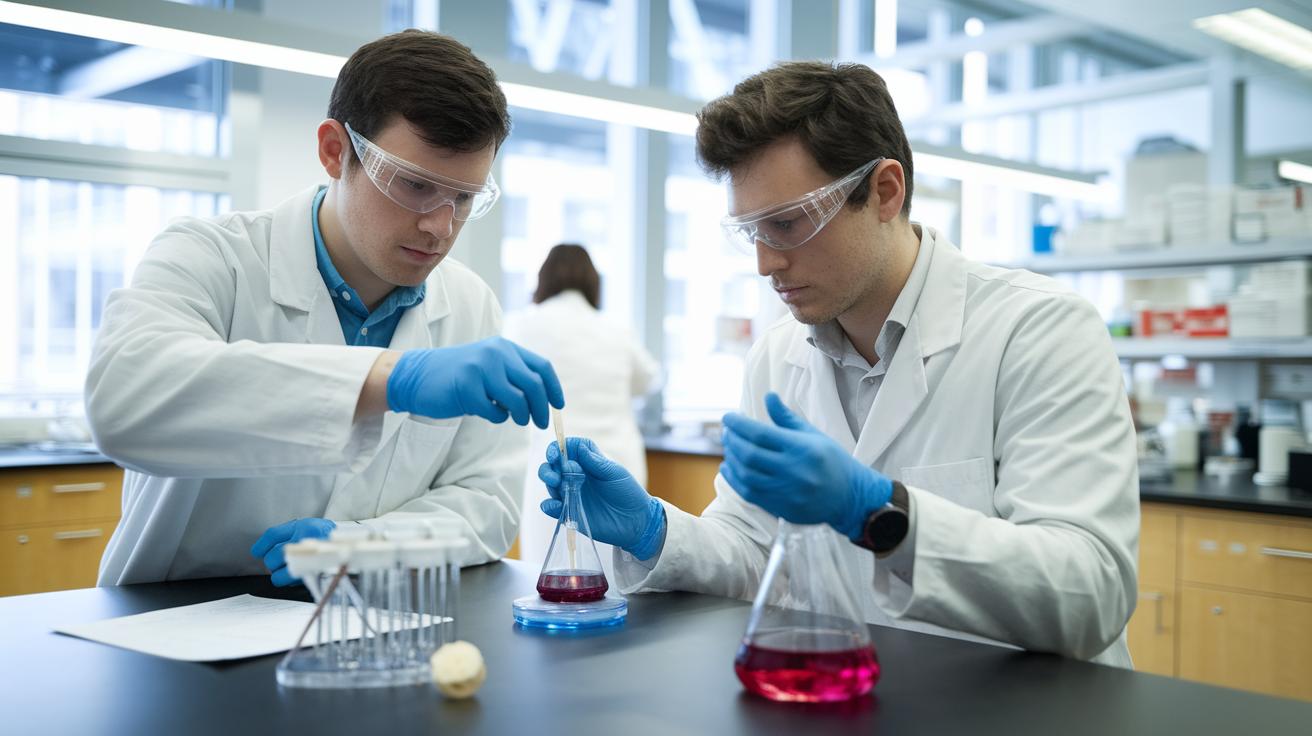
Both basic and applied science lean on a shared set of tools. Researchers in each area often rely on familiar methods such as interviews, surveys, focus groups, lab experiments, theoretical models, and observations. These techniques help us make sense of everything from the wonders of nature to the challenges we face every day.

In basic research, the focus is on exploring the unknown. Scientists use these methods to spark ideas, build simple models, and make careful observations that reveal nature’s hidden rules. On the other hand, applied research takes these same techniques and flips the script, aiming to create practical solutions and new technologies that can improve real-world problems.

Next, both types of research come together with approaches like translational research. This method shows how findings from a basic study can be transformed into useful tools, helping bridge the gap between theory and everyday life.

Comparative Approaches: Theory vs Practice in Basic vs Applied Science

Research in both basic and applied science uses many of the same tools, like lab work, theoretical models, and careful observations, but they each have their own unique goals. Basic research aims to uncover the secrets of how things work, while applied science zeroes in on solving everyday problems.

Theoretical Research Approaches

In basic research, scientists focus on building ideas and testing them. They develop simple models to explain natural events, much like sketching a rough draft before creating a full painting. This method sparks fresh insights and deepens our understanding of the world.

Experimental Research Techniques

Applied research takes a hands-on approach. Researchers follow detailed lab procedures, setting up experiments step-by-step, almost like following a trusted recipe, to find solutions for real-world challenges. This process turns theory into practical, useful outcomes.

Integrative Frameworks (Stokes’ Quadrant)

There’s also a clever mix, sometimes called Pasteur’s Quadrant, that combines the pursuit of deep understanding with the need for practical solutions. In this framework, even testing a theory can jump straight into creating new, innovative applications. Often, scientists start with an idea, run thorough experiments, and then discover ways to apply their findings in real life. This blend of approaches shows how integrating different research methods can boost both scientific insight and practical innovation.

Historical Evolution of Basic vs Applied Science

img-2.jpg

For many years, institutions like the NIH used simple charts to separate science into two clear groups: basic research that builds our knowledge and applied research aimed at finding real-world solutions. These early charts made it easy to decide how to distribute research funding and guide academic studies.

This neat division shaped a way of thinking where scientists either dug deep into understanding or focused on practical applications. It was almost as if there was a firm line drawn between exploring new ideas and solving everyday problems.

Then Donald Stokes shook things up with his idea of Pasteur's Quadrant. He pointed out that a single study can both expand our understanding and directly address practical needs.

Today, thinkers like Narayanamurti and Odumosu remind us that science isn’t so black and white. In reality, researchers usually mix theory with practice, suggesting that a more blended approach could better reflect the true nature of scientific work.

Real-World Applications of Basic vs Applied Science

Have you ever stopped to think how early bursts of scientific curiosity have blossomed into the practical tools we depend on every day? Researchers once explored nature simply to understand it better, and now those insights turn into life-saving medicines and cutting-edge tech.

Take a look at the table below. It shows a few clear examples where basic research, sparked by simple wonder about natural processes, sets the stage for innovative, real-world solutions.

Example Basic Science Role Applied Outcome
Penicillin Microbiology studies uncovered mold’s ability to kill bacteria Led to antibiotics that save countless lives
CRISPR Essential research in genetics enabled precise gene editing Spawned gene therapies that fight disease
Smartphones Advances in semiconductor physics paved the way for miniaturization Resulted in versatile, pocket-sized communication devices
Renewable Energy In-depth study of energy conversion sparked creative material innovations Inspired sustainable energy solutions to meet today’s needs

In short, these examples bridge that gap between pure inquiry and practical implementation. Basic science digs into understanding for its own sake, and then applied research steps in, turning those insights into everyday products and services. It’s a continuous cycle, from a lab bench discovery to a tool in your hand, where research meets real life. Learn more about this process in Best Practices in Translational Research.

Benefits and Limitations of Basic vs Applied Science

img-3.jpg

Basic research is like exploring the tiny building blocks of life. It helps us understand how things work at the very core, even if its impact isn’t felt right away. Think of it as laying the foundation for all future breakthroughs, seeds that might eventually grow into major innovations.

Applied research, on the other hand, is all about finding real-world solutions. It delivers tangible results, from cutting-edge technology to improved services that impact our daily lives. Researchers often use methods like big data analytics (which is just a fancy way of saying they study large sets of information) to quickly see if their ideas work.

Both types of research have their own hurdles. Basic research can be tough to justify in the short-term because its benefits aren’t immediate. Meanwhile, applied research might overlook the deeper insights needed for long-lasting progress. In short, balancing both these approaches is key to sparking a healthy mix of creative ideas and practical solutions.

Final Words

In the action, we explored how science methods shape our understanding and drive practical solutions. We defined basic science as the effort to uncover nature’s principles, contrasting it with applied science, which tackles real-world challenges. The post compared objectives, time frames, outcomes, and even historical evolution to show how these fields support each other. This blend of theory and practice empowers us to make smart, evidence-based health decisions. Recognizing basic vs applied science can truly spark positive change in how we live.

FAQ

What is the difference between applied science and basic science?

The difference between applied and basic science is that basic science expands our knowledge of natural phenomena without an immediate goal, whereas applied science uses this knowledge to solve practical, real-world problems.

What are some examples of basic and applied science in practice?

Basic science might include studies on cell functions to build theory, while applied science uses that theory to develop items like gene therapies or portable medical devices, turning ideas into products.

Are applied science degrees valuable in today’s job market?

An applied science degree proves valuable by equipping you with practical skills that transform scientific theory into innovative solutions, making you competitive and ready to address real-world challenges.

Where can I find resources like PDFs, journals, or courses on basic and applied science?

Resources such as PDFs, journals, and courses on basic and applied science are available through academic institutions, online libraries, and specialized educational platforms that provide current research and learning materials.

How do research methods in basic science differ from those in applied science?

Basic science research emphasizes discovering why phenomena occur and builds theoretical frameworks, while applied science employs similar methods but with a focus on developing technologies and solving specific, measurable problems.

Have you ever wondered if exploring nature just to learn for fun really matters? Basic science goes deep into discovering life's hidden secrets, almost like finding tiny puzzle pieces that nature has left behind. Applied science then takes these pieces and puts them together to fix everyday challenges. In simple terms, our pure curiosity and our need for practical answers work together. This shows that learning from a simple spark of interest can lead to breakthroughs that make life better.

Fundamental Definitions in Basic vs Applied Science

Basic science is all about uncovering the mysteries of nature just for the joy of learning. It’s the kind of research where scientists explore life’s inner workings, like how plant cells function, without worrying if it will lead to a quick fix or a new gadget. It’s driven by pure curiosity and the desire to understand how things really work.

On the other hand, applied science takes those theories and puts them to work solving real-life problems. Think of it as using a trusted recipe to create a meal that nourishes you. Researchers use what they know to tackle everyday challenges and build practical solutions that affect us all.

  • Objective: Basic science dives deeper into knowledge, while applied science zeros in on creating useful innovations.
  • Time Horizon: Basic research balances long-term exploration, and applied research commits to short- or mid-term results.
  • Outcome Type: The work in basic research enriches our understanding, whereas applied research produces tangible products or services.
  • Scope: Basic science looks at broad natural phenomena, while applied science focuses on specific, actionable issues.

Both approaches have their unique roles. Basic science lays the foundation by giving us the theories and frameworks to understand our world. Applied science then takes that information and turns it into practical tools and solutions that make our everyday lives better. This close relationship ensures that curiosity leads not only to new insights but also to innovations that help us solve the challenges around us.

Methodological Distinctions in Basic vs Applied Science

img-1.jpg

Both basic and applied science lean on a shared set of tools. Researchers in each area often rely on familiar methods such as interviews, surveys, focus groups, lab experiments, theoretical models, and observations. These techniques help us make sense of everything from the wonders of nature to the challenges we face every day.

In basic research, the focus is on exploring the unknown. Scientists use these methods to spark ideas, build simple models, and make careful observations that reveal nature’s hidden rules. On the other hand, applied research takes these same techniques and flips the script, aiming to create practical solutions and new technologies that can improve real-world problems.

Next, both types of research come together with approaches like translational research. This method shows how findings from a basic study can be transformed into useful tools, helping bridge the gap between theory and everyday life.

Comparative Approaches: Theory vs Practice in Basic vs Applied Science

Research in both basic and applied science uses many of the same tools, like lab work, theoretical models, and careful observations, but they each have their own unique goals. Basic research aims to uncover the secrets of how things work, while applied science zeroes in on solving everyday problems.

Theoretical Research Approaches

In basic research, scientists focus on building ideas and testing them. They develop simple models to explain natural events, much like sketching a rough draft before creating a full painting. This method sparks fresh insights and deepens our understanding of the world.

Experimental Research Techniques

Applied research takes a hands-on approach. Researchers follow detailed lab procedures, setting up experiments step-by-step, almost like following a trusted recipe, to find solutions for real-world challenges. This process turns theory into practical, useful outcomes.

Integrative Frameworks (Stokes’ Quadrant)

There’s also a clever mix, sometimes called Pasteur’s Quadrant, that combines the pursuit of deep understanding with the need for practical solutions. In this framework, even testing a theory can jump straight into creating new, innovative applications. Often, scientists start with an idea, run thorough experiments, and then discover ways to apply their findings in real life. This blend of approaches shows how integrating different research methods can boost both scientific insight and practical innovation.

Historical Evolution of Basic vs Applied Science

img-2.jpg

For many years, institutions like the NIH used simple charts to separate science into two clear groups: basic research that builds our knowledge and applied research aimed at finding real-world solutions. These early charts made it easy to decide how to distribute research funding and guide academic studies.

This neat division shaped a way of thinking where scientists either dug deep into understanding or focused on practical applications. It was almost as if there was a firm line drawn between exploring new ideas and solving everyday problems.

Then Donald Stokes shook things up with his idea of Pasteur's Quadrant. He pointed out that a single study can both expand our understanding and directly address practical needs.

Today, thinkers like Narayanamurti and Odumosu remind us that science isn’t so black and white. In reality, researchers usually mix theory with practice, suggesting that a more blended approach could better reflect the true nature of scientific work.

Real-World Applications of Basic vs Applied Science

Have you ever stopped to think how early bursts of scientific curiosity have blossomed into the practical tools we depend on every day? Researchers once explored nature simply to understand it better, and now those insights turn into life-saving medicines and cutting-edge tech.

Take a look at the table below. It shows a few clear examples where basic research, sparked by simple wonder about natural processes, sets the stage for innovative, real-world solutions.

Example Basic Science Role Applied Outcome
Penicillin Microbiology studies uncovered mold’s ability to kill bacteria Led to antibiotics that save countless lives
CRISPR Essential research in genetics enabled precise gene editing Spawned gene therapies that fight disease
Smartphones Advances in semiconductor physics paved the way for miniaturization Resulted in versatile, pocket-sized communication devices
Renewable Energy In-depth study of energy conversion sparked creative material innovations Inspired sustainable energy solutions to meet today’s needs

In short, these examples bridge that gap between pure inquiry and practical implementation. Basic science digs into understanding for its own sake, and then applied research steps in, turning those insights into everyday products and services. It’s a continuous cycle, from a lab bench discovery to a tool in your hand, where research meets real life. Learn more about this process in Best Practices in Translational Research.

Benefits and Limitations of Basic vs Applied Science

img-3.jpg

Basic research is like exploring the tiny building blocks of life. It helps us understand how things work at the very core, even if its impact isn’t felt right away. Think of it as laying the foundation for all future breakthroughs, seeds that might eventually grow into major innovations.

Applied research, on the other hand, is all about finding real-world solutions. It delivers tangible results, from cutting-edge technology to improved services that impact our daily lives. Researchers often use methods like big data analytics (which is just a fancy way of saying they study large sets of information) to quickly see if their ideas work.

Both types of research have their own hurdles. Basic research can be tough to justify in the short-term because its benefits aren’t immediate. Meanwhile, applied research might overlook the deeper insights needed for long-lasting progress. In short, balancing both these approaches is key to sparking a healthy mix of creative ideas and practical solutions.

Final Words

In the action, we explored how science methods shape our understanding and drive practical solutions. We defined basic science as the effort to uncover nature’s principles, contrasting it with applied science, which tackles real-world challenges. The post compared objectives, time frames, outcomes, and even historical evolution to show how these fields support each other. This blend of theory and practice empowers us to make smart, evidence-based health decisions. Recognizing basic vs applied science can truly spark positive change in how we live.

FAQ

What is the difference between applied science and basic science?

The difference between applied and basic science is that basic science expands our knowledge of natural phenomena without an immediate goal, whereas applied science uses this knowledge to solve practical, real-world problems.

What are some examples of basic and applied science in practice?

Basic science might include studies on cell functions to build theory, while applied science uses that theory to develop items like gene therapies or portable medical devices, turning ideas into products.

Are applied science degrees valuable in today’s job market?

An applied science degree proves valuable by equipping you with practical skills that transform scientific theory into innovative solutions, making you competitive and ready to address real-world challenges.

Where can I find resources like PDFs, journals, or courses on basic and applied science?

Resources such as PDFs, journals, and courses on basic and applied science are available through academic institutions, online libraries, and specialized educational platforms that provide current research and learning materials.

How do research methods in basic science differ from those in applied science?

Basic science research emphasizes discovering why phenomena occur and builds theoretical frameworks, while applied science employs similar methods but with a focus on developing technologies and solving specific, measurable problems.

More from author

LEAVE A REPLY

Please enter your comment!
Please enter your name here

Related posts

Advertismentspot_img

Latest posts

How To Create A Daily Wellness Routine: Thriving

Curious about how to create a daily wellness routine that transforms your mornings and days? Read on as secrets await…

2 Daily Wellness Drink Tips For Radiance

Experience a daily wellness drink with natural herbs, green ingredients, and clinical backing that might change your routine forever, stay tuned.

Daily Wellness: Elevate Your Everyday Vitality

Daily wellness transforms everyday routines into mindful adjustments, merging nutrition, movement, and restorative sleep. What unforeseen practice awaits you next?

Want to stay up to date with the latest news?

We would love to hear from you! Please fill in your details and we will stay in touch. It's that simple!